What Are the Best Tips for Camping with Kids?
Camping with kids can be a magical experience, sparking a love for nature and creating memories that last a lifetime. But it also comes with challenges—keeping children entertained, safe, and comfortable requires thoughtful planning and a bit of creativity. Whether you’re pitching a tent in a national park or car camping at a local campground, this guide offers practical tips to make your family adventure enjoyable for everyone. From engaging activities to safety precautions, here’s how to ensure a smooth and fun camping trip with kids.
1. Planning for Success
A great camping trip starts long before you arrive at the campsite. Involving kids in the process and tailoring plans to their needs sets the stage for a positive experience.
Choose a Kid-Friendly Destination**: Opt for campgrounds with amenities like flush toilets, running water, or playgrounds, especially for younger kids or first-timers. Sites near lakes, streams, or hiking trails offer natural entertainment. Research family-oriented spots—many state and national parks, like Yosemite or Great Smoky Mountains, list kid-friendly features on their websites.
Involve Kids in Planning**: Let children help pick the destination, meals, or activities. Older kids can research trails or wildlife, while younger ones might choose a favorite snack. This builds excitement and gives them a sense of ownership.
Keep It Simple! For beginners, start with a one- or two-night trip close to home. Car camping is easier than backpacking, as it allows more gear and flexibility. Avoid overpacking the schedule—kids need downtime to explore or relax.
Practice at Home. Set up the tent in your backyard for a trial run. Let kids help pitch it, unroll sleeping bags, or test headlamps. This familiarity reduces anxiety and makes the real trip feel like an adventure, not a chore.
Pack for Comfort. Bring familiar items like a favorite blanket or stuffed animal to ease bedtime. Pack layers—kids get cold faster than adults—so include fleece jackets, hats, and waterproof gear. A pack list tailored to each child’s age ensures nothing critical (like diapers or extra socks) is forgotten.
2. Keeping Kids Safe
Safety is priority one when camping with children. The wilderness can be unpredictable, so proactive measures keep risks in check.
Set Clear Boundaries. Upon arrival, walk the campsite with your kids and point out safe areas to play. Use natural landmarks (e.g., “stay between this tree and the fire pit”) to define limits. For younger kids, bright clothing or a whistle on a lanyard helps you spot or hear them if they wander.
Teach Wildlife Safety. Explain how to act around animals—don’t feed them, keep distance, and stay calm. In bear country, store all food, trash, and scented items (like sunscreen) in bear-proof containers or your car, never in the tent. Practice phrases like “look big” for bear encounters to make it a game rather than scary.
Water and Fire Precautions. Kids are drawn to water, so always supervise near lakes or streams. Teach them to stay back from fire pits unless an adult is present, and never leave a campfire unattended. Use glow sticks or headlamps for nighttime visibility.
First Aid Readiness. Pack a kid-focused first aid kit with band-aids, antiseptic wipes, tweezers (for splinters or ticks), and child-safe pain relievers. Include any medications your child needs, plus extras in case of delays. Know the location of the nearest ranger station or hospital—most campgrounds provide this info at check-in.
Sun and Bug Protection. Apply sunscreen (SPF 30+) every few hours and use hats or UV-protective clothing. For bugs, choose DEET-free repellents like picaridin for kids under 6. Check for ticks daily, especially after hiking, focusing on scalps, armpits, and groins.
3. Keeping Kids Comfortable
Comfortable kids are happy campers. Anticipating their physical and emotional needs makes the trip more enjoyable for everyone.
Sleep Setup. Choose sleeping bags rated for colder-than-expected nights (e.g., 20°F for spring camping). Add foam pads or air mattresses for extra cushioning—kids wiggle and feel the ground more than adults. If kids share a tent, ensure it’s spacious enough to avoid squabbles. A battery-powered lantern can double as a nightlight.
Clothing Strategy. Pack layers for changing weather: moisture-wicking shirts, fleece jackets, and waterproof pants. Bring extra socks and sturdy shoes (not flip-flops) for hiking or wet ground. A hat keeps sun off faces and warmth in at night. Let kids pick one “fun” outfit to boost morale.
Bathroom Solutions. Public restrooms can intimidate young kids, so bring a portable potty for toddlers or a flashlight for nighttime trips. Pack hand sanitizer, wipes, and a small towel for quick cleanups. Teach kids to bury waste if no facilities exist, following Leave No Trace rules (6-8 inches deep, 200 feet from water).
Food and Hydration. Kids burn energy fast, so pack high-calorie snacks like trail mix, granola bars, or peanut butter packets. Plan familiar meals—think hot dogs or mac-and-cheese—that cook easily over a fire or camp stove. Involve kids in prep, like skewering veggies, to keep them engaged. Ensure each child has a reusable water bottle and drinks regularly—aim for 4-6 cups daily, more if active.
Manage Expectations. Kids may tire or get cranky, especially if it’s their first time. Schedule naps or quiet time, and be flexible if a planned hike feels overwhelming. A cozy story in the tent can reset the mood.
4. Keeping Kids Entertained
Boredom is the enemy of a fun camping trip. Luckily, nature is a playground, and a mix of structured and free activities keeps kids engaged.
Nature Exploration. Turn hikes into scavenger hunts—look for pinecones, animal tracks, or colorful rocks. Apps like iNaturalist let kids identify plants or bugs, turning curiosity into learning. For safety, stick to marked trails and keep kids within sight.
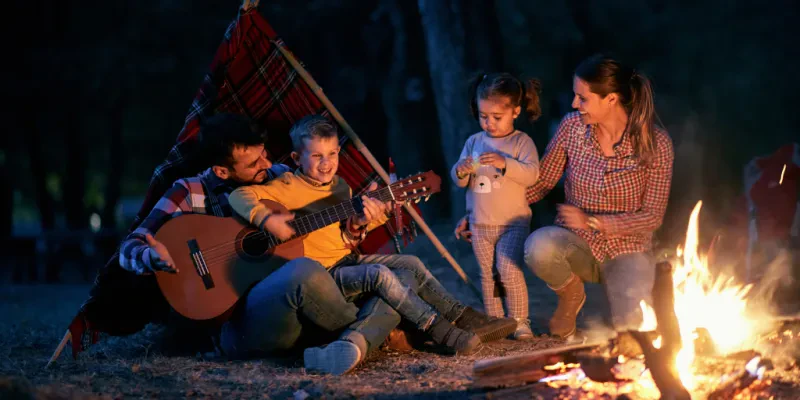
Campfire Fun. Roast marshmallows for s’mores, but supervise closely to avoid burns. Teach older kids to toast safely with long sticks. Share stories or sing songs—classics like “Sweet Caroline” or silly campfire tales spark giggles. Glow sticks add a safe, festive vibe for nighttime play.
Games and Crafts. Pack lightweight games like Uno or a deck of cards for rainy days. Bring paper and crayons for leaf rubbings or nature sketches. A magnifying glass lets kids inspect bugs or bark up close. Geocaching, using a GPS or app, is a high-tech treasure hunt many campgrounds support.
Water Activities. If near a lake or stream, try skipping stones, fishing (check local permits), or wading in shallow areas. Always use life jackets for kids near deep water, even strong swimmers. A small inflatable pool float can double as a nap spot.
Stargazing. At night, lay out a blanket and spot constellations. Apps like SkyView identify stars, making it educational. Tell mythology stories tied to constellations (e.g., Orion’s hunt) to captivate imaginations. A red-filtered flashlight preserves night vision.
5. Family-Friendly Activities for Bonding
Camping is a chance to strengthen family ties. These activities blend fun with teamwork, creating shared experiences.
Build a Fort. Use fallen branches or tarps to construct a mini-shelter. Kids love designing their own space, and it teaches basic knots or teamwork. Just dismantle it before leaving to follow Leave No Trace principles.
Photo Safari. Give each child a disposable camera or share your phone to capture wildlife, scenery, or silly poses. At home, print a scrapbook to relive the trip. Older kids might enjoy a GoPro for action shots.
Storytelling Relay. Around the campfire, start a story and let each person add a sentence. It can be silly, spooky, or heroic—kids’ creativity shines. Record it on your phone for a keepsake.
Nature Journaling. Provide notebooks for kids to draw or write about what they see—birds, clouds, or their favorite moment. Younger kids can dictate to parents. This doubles as a quiet-time activity.
Volunteer Together. Some campgrounds offer ranger-led cleanups or trail maintenance. Joining as a family teaches stewardship and often includes perks like meeting park staff or learning local history.
Final Tips for Camping with Kids
Camping with kids is about balance—structure keeps things safe and comfortable, but flexibility lets their curiosity lead. A few last pointers:
Model Positivity: Kids pick up on your attitude. If you’re excited about a muddy trail or a chilly morning, they’re more likely to be, too.
Pack Light Extras: A small toy, book, or frisbee can be a lifesaver during downtime, but avoid overloading with electronics—nature’s the star.
Celebrate Small Wins: Praise kids for helping with the tent, spotting a deer, or trying a new food. It builds confidence for future trips.
Know When to Pivot: If a kid’s struggling—cold, scared, or overtired—adjust plans. A car nap or early bedtime can save the day.
Camping with kids isn’t always easy, but it’s worth it. The first frog they catch, the stars they’ve never seen so bright, the marshmallow that catches fire just right—these moments stick. Plan for their safety and comfort, sprinkle in fun, and watch them fall in love with the outdoors. Before you know it, they’ll be begging for the next trip.
---
This article is packed with actionable advice for camping with kids, balancing practicality with inspiration. If you’d like me to adjust it—say, for a specific age group like toddlers or teens, or to focus on a particular type of camping—just let me know!